Crawl Space Water Extraction in Frazier Park, CA
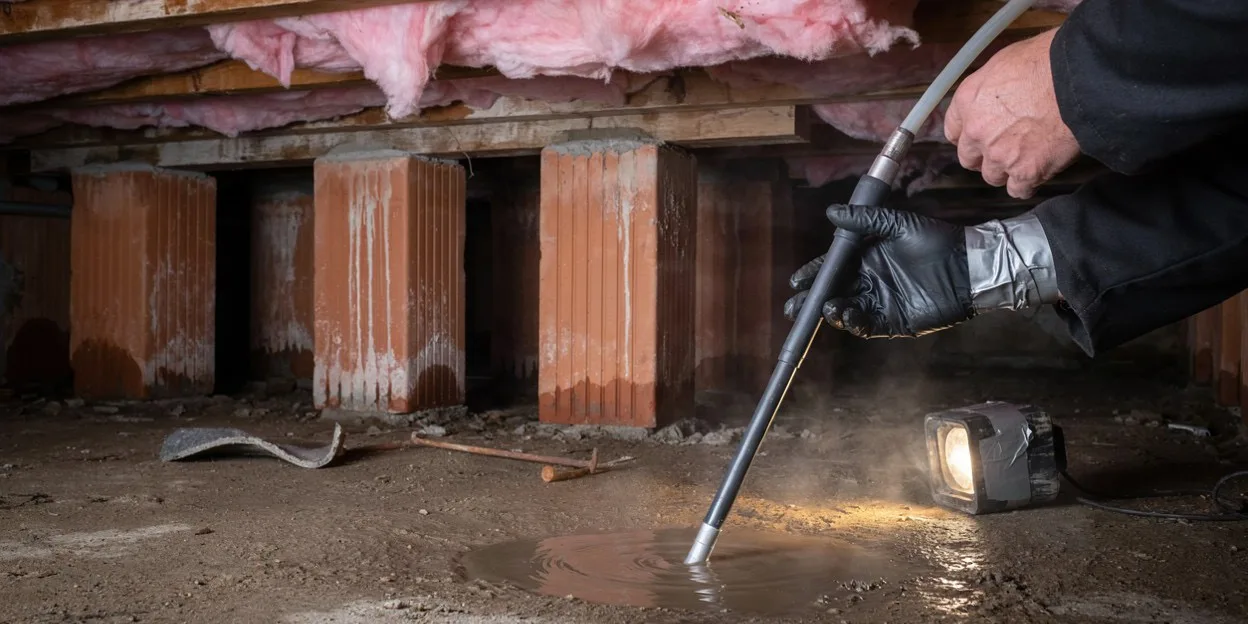
The house has smelled musty since the snow melted, and when you finally pulled the hatch and shined a light under the floor, the beam came back off standing water. This site connects you by phone with an independent local provider who does crawl space water extraction in Frazier Park and across southern Kern County.
What the crew does first
The crew goes under the house with a light, a meter, and a pump. They find out where the water came from, because that changes the job. A leaking supply line or drain under the floor is a plumbing problem that has to be fixed first. Snowmelt or storm runoff coming in through a vent or under the skirting is a grading and drainage problem. A water heater or a burst pipe upstairs is water that came through the floor.
Then they pump out the standing water and meter the joists, the girders, the underside of the subfloor, and the posts. Wet insulation between the joists gets pulled. Then air movers and a dehumidifier go under the house, and the crew comes back to take readings until the wood is down to its target.
What to do in the next hour
If the water is from a pipe, shut the house valve or the well pump breaker. Do not go under the house if the water is near wiring or a furnace, or if the joists look like they have dropped. Pull the hatch and leave it open so air can move.
Take a photo from the hatch with a flashlight. Note where the water is deepest. If it rained or snowed recently, walk the outside of the house and look for a downspout, a low spot, or a vent that water could have come through. Then call.
What is usually saved and what is not
Joists, girders, and subfloor usually dry in place if the crew gets to them before the wood softens. Fiberglass insulation under the floor almost always gets removed once it is wet, since it holds water against the subfloor and never dries evenly. A vapor barrier on the ground gets replaced. Posts that sat in water for weeks get checked at the base, and a post on a concrete pier usually survives where a post on dirt may not.
The floor above is the second question. If the water came through the floor, the room upstairs needs its own water extraction and drying. If the crawl space simply stayed damp long enough to wick up, the subfloor reads wet from below while the finished floor looks fine, and structural drying handles both sides at once.
Kern County notes: raised floors on the mountain
Most of the cabin stock in Frazier Park, Lake of the Woods, and the older parts of Pine Mountain Club sits on piers or a short stem wall with a wood floor over a crawl space. Lots slope, and a cabin built into a hillside in Cuddy Valley or Pinon Pines often has a crawl space that is two feet deep at the uphill side and six at the downhill side. Water from snowmelt follows the slope in through the vents or under the skirting and pools at the low end, where it can sit unseen until spring.
Cold makes it worse. A crawl space at 5,000 feet in February does not dry on its own, and the pipes that run through it are the ones that freeze. A split line under the floor can run for days in an empty house and never show upstairs until the floor goes soft. The February 2023 storms that buried the mountain communities under more than two feet of snow left many crawl spaces wet for weeks once the melt started. If the water came from a frozen line, read about frozen pipe cleanup.
Not every house here is on a district line. Homes in Lockwood Valley and on the larger lots around Cuddy Valley are on private wells and septic, and a leaking well line or a backed-up drain under the floor is a different job from a supply leak. Tell the crew which one you have. Ask them to photograph the space before pumping and to log the readings, since a crawl space is the part of the house an adjuster never sees in person.
Calling about crawl space water extraction
Have the address ready and say how deep the water is, whether it came from a pipe or from outside, whether the house is on a well or septic, and whether the floor above feels soft anywhere. Say if the house is a seasonal home and when it was last checked. Call (661) 605-4547.