Roof Leak Water Damage in Frazier Park, CA
Two feet of snow sat on the roof for a week, and on the first warm afternoon a brown stain bloomed on the bedroom ceiling and started to drip. This site connects you by phone with an independent local provider who handles roof leak water damage in Frazier Park and across southern Kern County.
What the crew does first
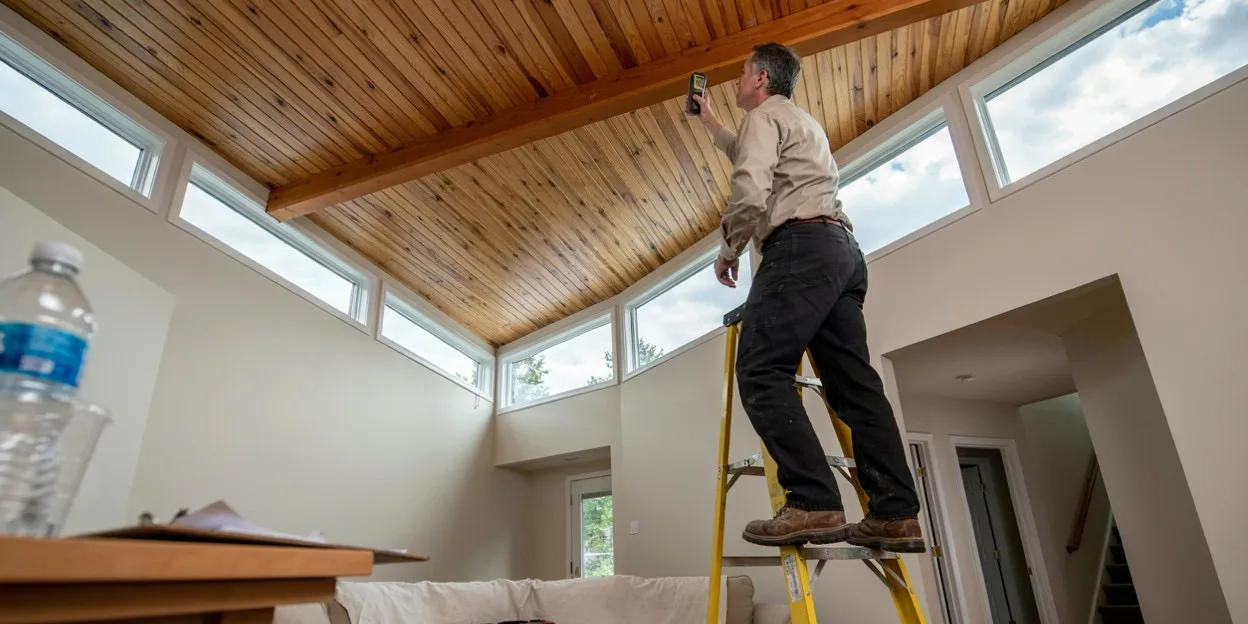
The crew does not fix the roof. A roofer or a tarp does that, and it has to happen first, or the drying never catches up. What the cleanup crew does is find out what got wet on the way down. They go into the attic or the ceiling cavity with a light and a meter and check the insulation, the underside of the roof deck, the top of the drywall, and the framing.
Then they follow the water. A roof leak rarely drips straight down. It runs along a rafter, drops onto the top plate of a wall, and comes down inside the wall to the floor. The stain on the ceiling is the visible end of a path that may include a wall cavity and a section of subfloor. The readings map that path before anyone opens anything.
What to do in the next hour
Put a bucket under the drip. If the ceiling is sagging, stay out from under it and keep pets and kids out of the room. Do not poke it. A ceiling full of water can let go all at once.
If you can safely reach the attic, take a photo of the wet spot from above. Move furniture and rugs out from under the stain. Turn off the light fixture below it at the breaker if water is anywhere near it. Then call. If snow is still on the roof, the melt will keep coming until the snow is gone or the roof is tarped.
What is usually saved and what is not
Rafters and roof decking usually dry in place. Blown-in or batt insulation that got wet gets pulled and replaced, since it never dries evenly and holds water against the drywall. The wet section of ceiling drywall usually comes out, both because it has lost its strength and because that is how the crew gets air into the cavity.
Walls that carried the water down are the surprise. They often read wet at the top plate and the bottom plate with a dry stripe in between. Once the roof is stopped and the wet material is out, structural drying finishes the job. Ceiling and wall rebuild is a separate phase after the readings come down, and the crew can tell you whether they handle it or hand it off.
Kern County notes: snow, ice dams, and summer cells
Snow is the mountain's roof problem. Frazier Park, Lake of the Woods, and Pine Mountain Club see storms that leave a foot or two on a roof, and the February 2023 storms dropped more than that across the mountain communities. Snow melts from the bottom where the roof is warm, runs to the cold eave, refreezes into an ice dam, and the meltwater behind the dam backs up under the shingles. Low-slope cabin roofs and additions with a shallow pitch are the usual victims.
Summer brings the other kind of leak. Monsoon thunderstorms over the Tehachapi and San Emigdio ranges can drop an inch of rain in a short cell, and a roof valley clogged with pine needles overflows into the attic. In the valley towns, roofs fail in the winter rains, and the March 2023 storms that flooded Wasco and McFarland also found every worn flashing between Taft and Delano.
A roof repair in the unincorporated mountain communities may need a permit from Kern County Public Works, and the cities down the hill have their own desks. Many policies cover sudden roof-leak damage from a storm but not a roof that wore out, and they often exclude the roof repair itself. Ask the crew to photograph the attic and log the readings. If the ceiling stain came from a pipe rather than the roof, see leak detection.
Calling about roof leak water damage
Have the address ready and say whether the roof has been tarped or repaired yet, whether snow is still on it, which rooms have stains or drips, and whether the ceiling is sagging. Say if you have already been in the attic. Call (661) 605-4547.