Water Damage Restoration in Shafter, CA
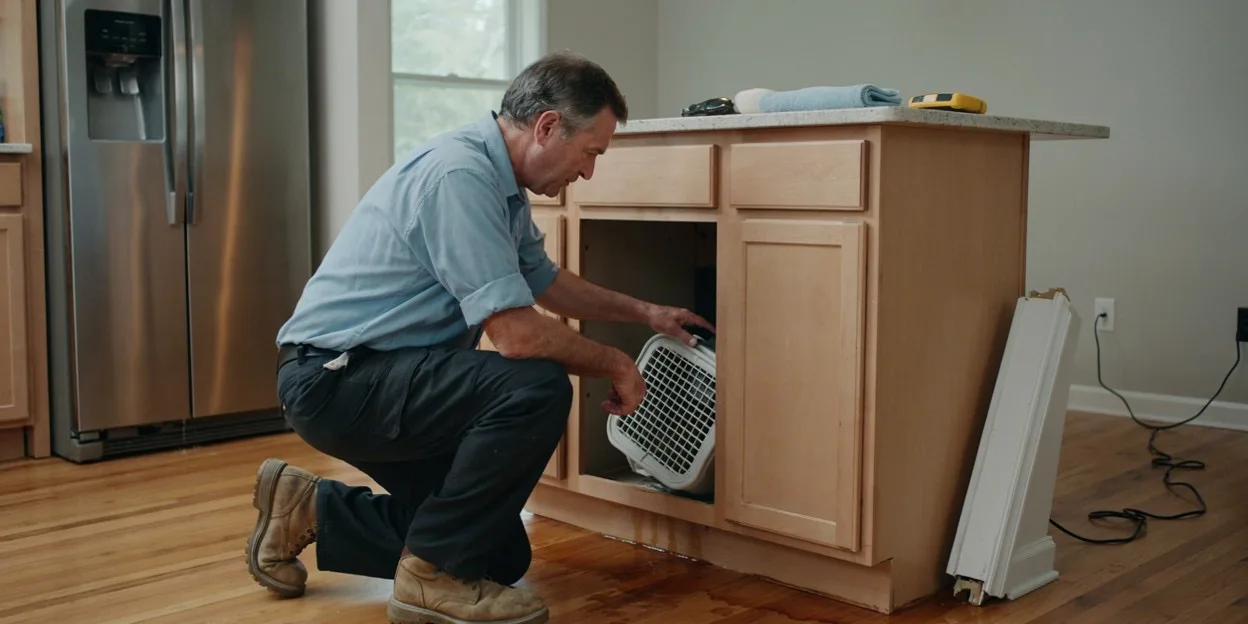
Shafter began in 1913 when the Kern County Land Company built a hotel to house buyers for the townsite it subdivided the next year. The Green Hotel is still there, and so is the 1917 Santa Fe depot, moved and restored as a museum in 1982. Around that core the city has grown into a mix of 1920s bungalows, postwar ranch houses, and the newer tracts that came with the rail yard and warehouses on the south side. Almost everything sits on a slab, and the older neighborhoods carry the original pipe.
Shafter is on the flat north of Bakersfield, and Poso Creek runs a few miles north of town. In March 2023 it flooded Wasco and McFarland, and the same storms tested every roof in Shafter.
Water Damage Frazier Park connects homeowners in Shafter with an independent local water damage provider by phone. You describe the problem, and the provider who calls back decides what to look at first.
Shafter water damage, bungalow to tract
A supply line that pinholed under a 1950s slab shows up as a warm floor or a bill that jumped, and leak detection marks the spot before anyone cuts concrete. A tank that let go in the garage is a water heater leak cleanup job before the water crosses into the hall. After either, structural drying brings the walls back down.
Where to call in Shafter
The city runs its own system, and the City of Shafter Water Division operates seven wells, about 70 miles of mains, and three storage tanks, with Public Works answering leak calls and meter shutoffs. Rebuild permits go through the city as well. The Shafter Depot Museum, run by the historical society, keeps the record of how the older neighborhoods were laid out.
Call (661) 605-4547 to be connected with a local water damage provider serving Shafter.
Services Available in Shafter
Water Extraction
Standing water pumped out of a cabin, garage, or living room, then the first meter readings to see how far it traveled.
Structural Drying
Air movers and dehumidifiers run by the readings until subfloor, framing, and drywall come back to their dry target.
Leak Detection
Finding a hidden supply-line, wall, or under-floor leak on a mountain lot before anyone opens a wall.
Frozen Pipe Cleanup
Cleanup after a pipe froze and split in an exterior wall, crawl space, or empty cabin, then drying what the thaw soaked.
Burst Pipe Water Damage
The rooms, floors, and walls a failed supply line reached, pumped out and dried once the water is shut off.
Roof Leak Water Damage
Wet insulation, ceilings, and walls dried out after snow load, an ice dam, or a summer storm found a way through the roof.
Water Heater Leak Cleanup
A failed tank in a closet, garage, or utility room and the flooring and drywall it soaked.
Crawl Space Water Extraction
Standing water pumped from under a pier-and-post home, then joists and subfloor checked and dried.