Water Damage Restoration in Wasco, CA
Wasco was a colony first. In 1907 more than 200 families bought lots on nine sections of Kern County Land Company ground, moved out, and discovered that water rights were not part of the deal. Drilling wells was the first thing the town did, and it has been doing it since. The city grew into the rose capital of the valley, with fields that still bloom every September for the Rose Festival, and its housing runs from 1920s colony bungalows to postwar ranch houses to the newer tracts on the edges, nearly all on slabs.
Poso Creek is the town's weak spot. Dry most years, it swells every six to ten years, and in March 2023 debris jammed against the Highway 43 bridge and sent water into Wasco and Pond, with evacuation orders for both.
This site connects Wasco homeowners with an independent local water damage provider by phone. The provider looks at the house and sets the scope.
Wasco water damage, from the creek and from the slab
Storm water that crossed the floor in March 2023 is the kind of loss water extraction handles first, followed by a long round of structural drying for the drywall and framing it soaked. A copper line under a 1960s slab that pinholed shows up as a warm floor or a bill that jumped, and leak detection marks the spot before anyone breaks concrete.
Tell the provider whether the water came from the creek or from inside the house.
Where to call in Wasco
The city runs its own system, and the City of Wasco Water Division on 7th Street handles leak reports and meter shutoffs around the clock. Rebuild permits go through the city as well. The Wasco Rose Festival has run every September for more than fifty years and is the one weekend the whole town is out on the street.
Call (661) 605-4547 to be connected with a local water damage provider serving Wasco.
Services Available in Wasco
Water Extraction
Standing water pumped out of a cabin, garage, or living room, then the first meter readings to see how far it traveled.
Structural Drying
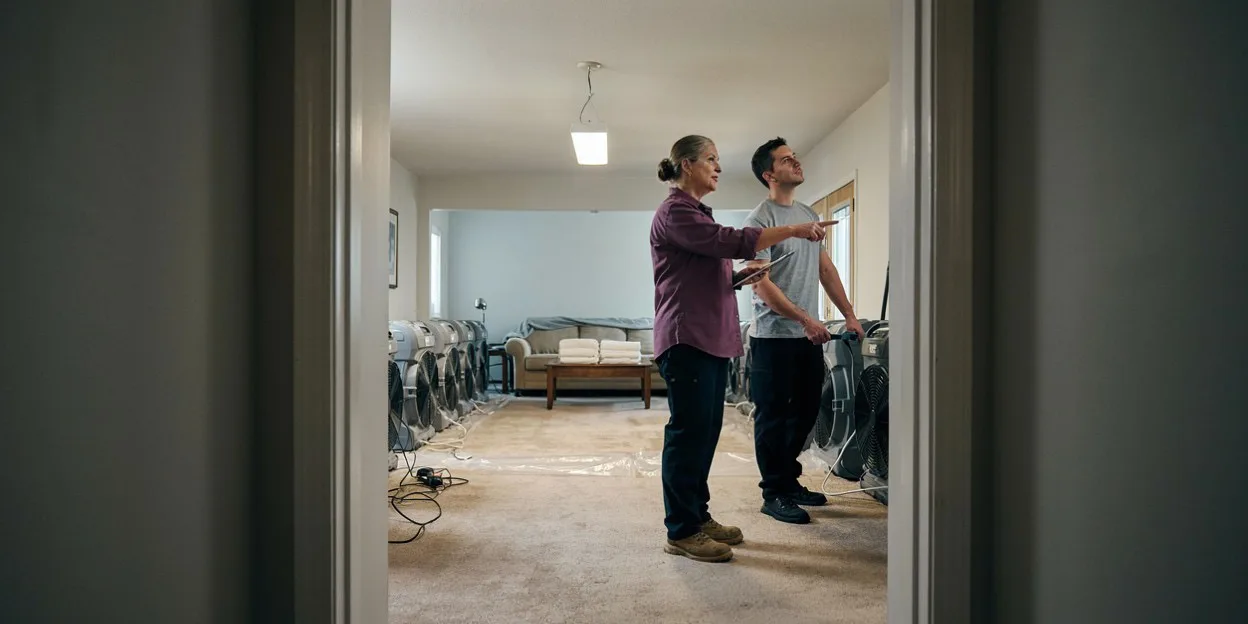
Air movers and dehumidifiers run by the readings until subfloor, framing, and drywall come back to their dry target.
Leak Detection
Finding a hidden supply-line, wall, or under-floor leak on a mountain lot before anyone opens a wall.
Frozen Pipe Cleanup
Cleanup after a pipe froze and split in an exterior wall, crawl space, or empty cabin, then drying what the thaw soaked.
Burst Pipe Water Damage
The rooms, floors, and walls a failed supply line reached, pumped out and dried once the water is shut off.
Roof Leak Water Damage
Wet insulation, ceilings, and walls dried out after snow load, an ice dam, or a summer storm found a way through the roof.
Water Heater Leak Cleanup
A failed tank in a closet, garage, or utility room and the flooring and drywall it soaked.
Crawl Space Water Extraction
Standing water pumped from under a pier-and-post home, then joists and subfloor checked and dried.